20 New Tips For Picking Anti-Termite Services In Jakarta
Wiki Article
Mud And Moisture Tubes- Jakarta's Battle
Jakarta exterminators remove mud tubes from foundation walls every day and call it termite control. This isn't. It's not. The mud tube isn't the enemy but it is evidence. The termites don't create these earthen passages to enjoy the building process. They build them because their bodies are bags of water wrapped in cuticle thin enough to dehydrate in minutes when the humidity falls to below 70. Each mud tube that climbs an Jakarta wall is an admission. The tube reveals exactly where moisture is escaping an area. If you do harm to the tube and fail to repair the source of moisture, the colony is guaranteed to be rebuilt right next door.
1. Mud Tubes Are Hygrometers, Not Highways
Termites leave soil particles on the places where the evaporation rate is most high. A tube that runs along the exterior wall of a bathroom indicates that the vapor is exiting through the mortar joints. A tube that emerges near the slab's edge suggests that the soil beneath is still saturated. When exterminators read tubes as moisture charts rather than invasion routes, they are consultants to improve the performance of buildings instead of pest control experts. This is higher-valued work. Charge according to the value of the work.
2. Twelve Percent is Invisibility's Threshold
Wood is invisible to termites that are scavenging below a moisture content of 12 percent. Above fifteen percent, it emits detectable volatile compounds. Most Jakarta homes have timber that was able to cross the threshold many years ago, but did not dry out. The anti-termite products that do not have pin-type moisture meters or examine every door's window sill, frame and beam embedded are guessing. Clients pay for certainty.
3. The 300-500mm Moisture Belt
The soil adjacent to foundation walls remains much dryer due to roof eaves. Foraging termites are mainly found within the area between 300 and 500 millimeters away from the structure. This is close enough to the foundation, yet far enough for rain to fall. In the deserts of hydrologic, bait stations are mounted flush against walls. Professional installation requires taking measurements and placing stations near termites' real foraging locations.
4. Potting mix is a bait station technology
Potting mix that has a high organic content, soaked in water, and then refilled around baiting stations, produces a manufactured moisture-shadow that draws attention away from the location. Jakarta's compacted, urban clay lacks both the porosity required by termites and the organic content they require. Exterminators set up traps in unaltered native soil, however they are not traps. The hole should be large enough. The soil must be brought in. The moisture level must be artificially increased.
5. Above-Ground Stations exploit Tube Behavior
The above-ground stations bind to the active mud tubes and force termites to cross the toxicant-impregnated matrix during their daily trek between feeding sites and nests. It is not baiting, it's toll collection. The tube stays in tact, the termites continue their journey and every forager who walks by is poisonous to the colony. The destruction of tubes by exterminators prior to installing stations destroy their delivery system.
6. Water is a attracting element - Not Resistant
US Patent 6023879 (granted in 2000) is a description of the use water to moisten the soil around bait stations. The termites are actively attracted to the toxicant. Twenty-five years after the invention of termiticides Jakarta's exterminators remain convinced that moisture hinders their work. This isn't the case. The effectiveness of repellent chemicals is overpowered by the effectiveness of a strategic irrigation. Exterminators who do not water the bait arrays are waiting for termites to appear in a random manner, rather than controlling their entry.
7. Lawns are termite Deserts
Turfgrass is fertilized by pesticides or herbicides. This reduces the termite's hunting activity. In addition, soils that are organically rich sustain continuous termite stress. Anti-termite programs that spread monitoring stations evenly across properties regardless of their ground cover, are ineffective and waste stations on sterile turf while they are not adequately sampling high-risk areas. Grids for stations must be focused on areas in areas where termites are actually found.
8. Self-Recruitment increases effectiveness
The transfer of termites that are alive into a bait cartridge moistened with water from a station infested with termites induces a self-recruitment behaviour. The introduced termites already accustomed to the station's surroundings start feeding immediately and then recruit nestmates through trophallaxis. This one step increases the amount of toxicants consumed by 30 percent. Jakarta exterminators who kill termites they remove from their monitoring stations have wasted their effectiveness.
9. Concrete Coring Is Non-Negotiable
Sealed hardscape--driveways, patios, sidewalks--prevents rainfall infiltration and creates artificial dry zones beneath the building perimeter. Professional protocols call for core drilling into concrete in order to install bait stations in the soil below, and then by installing stainless steel caps flush with the grade that has been finished. In avoiding coring due homeowner resistance, anti-termite companies accept that up to 50 percent of the perimeter is left untreated. Note this limitation. Document this limitation.
10. Scraping tubes to be used for cosmetic reasons is a good idea.
Pest control firms try to convince homeowners that mud tubes that appear on the surface of the soil are the actual problem and that removal would help to treat the issue. However, this is not the case. It's the same as emptying out a mousetrap before sealing a opening in the baseboard is scraping tubes, but not taking care of the moisture that led to their development. Exterminators are hired by homeowners to get rid of colonies, but not to clean walls. Jakarta termite exterminators who differentiate between maintenance for cosmetic purposes and colony removal will dominate this top segment.
Conclusion
Jakarta's fight against humidity and mud tubes isn't a battle against termites. It's a fight against physics. Jakarta's construction flaws, drainage failures and soil chemistry problems are not expressed by termites. Anti-termite services that position themselves as building performance consultants--arriving with moisture meters, core drills, irrigation tubing, and soil amendments--will win heritage contracts, high-value residential clients, and commercial property portfolios. The price will be the sole element in the competition for services that scrape pipes, sell poison and continue as if it were. The moisture gradient is measurable. The irrigation protocol dates back 25 years. It is protected by patent. Jakarta exterminators have no option other than to implement the techniques. The question is not whether or not to adopt the methods but if they'll do it ahead of or after competitors. Follow the top jasa basmi rayap for website info including anti rayap, kayu anti rayap, penyebab rayap, pengendalian hama, pembasmi rayap kayu, jasa anti rayap jakarta, jasa anti rayap, jasa pembasmi rayap, pest control jakarta selatan, jasa anti rayap and more.
Above-Ground Baiting For Asian Subterraneans In Jakarta
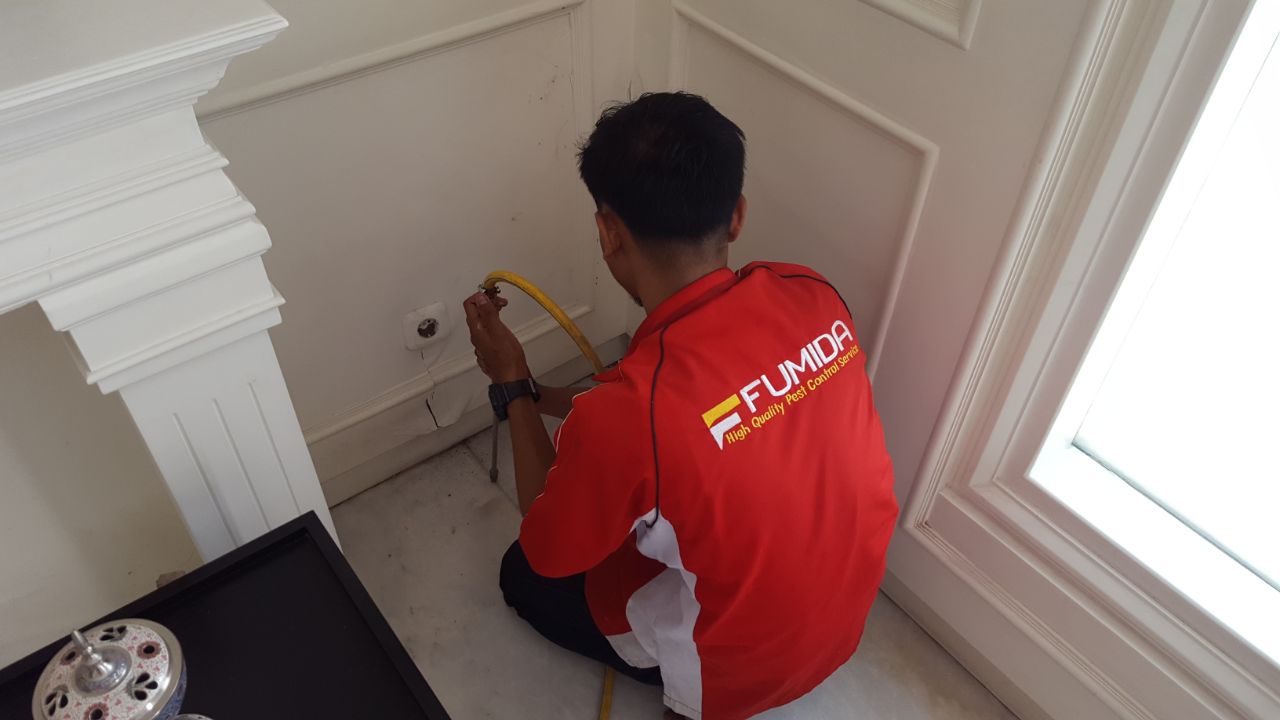
Jakarta homeowners are inclined to believe that termite trapping is just a thing of putting plastic boxes in their gardens, and then checking them periodically by technicians who peer inside the station, then shrug their shoulders and move on. This is a form of perimeter surveillance, not colony elimination. Baiting above ground is a completely different area of expertise. The station is not buried; it is locked directly onto an active mud tube or is pressed against excavated damage. The termites are not required to locate the bait. The station is set up on their commuter highway. For Asian subterranean species--Coptotermes gestroi, Coptotermes curvignathus, Microtermes insperatus--above-ground delivery bypasses every behavioral barrier that makes perimeter baiting slow and uncertain. Jakarta anti termite service without an above-ground stations in their vehicles are primarily equipped for inspection and not for treatment.
1. Above-Ground Stations require an active infestation
The method of baiting the perimeters is based upon the assumption. Stations are put in place and technicians wait for termites to discover them. Above-ground baiting works on confirmation. The station is deployed only after damaged or mud tubes timber is located. This is not an obstacle or a problem, but a method to increase effectiveness. There is no plastic placed in soil that is sterile. There is no need to waste technician time on stations that will never be hit.
2. The Mud Tube as Delivery Infrastructure
Stations above ground are designed to be integrated into existing structures for termites. The base of the station creates an enclosed chamber above the opening of the mud tube. Termites traveling from the nest to the feeding site will pass through station, get into contact with the bait matrix that they consume and continue their journey. The tube remains in place. The commuting pattern is not affected. The colony poisons it's own infrastructure.
3. The palatability test is different if the delivery is above-ground
The colony is already passing the screening for palatability. The location of the feeding can be confirmed. Above-ground bait matrices need only be acceptable. They're not particularly attractive. This permits the addition of poisons that have slow-moving action, which would not be allowed in the case of untreated wood. Jakarta exterminators have to carry multiple formulations of baits to choose according to the feeding preferences observed at the specific locations of infestation.
4. Self-Seeding Multiplier to Recruit
Moving live termites into the station's above-ground chamber for recruitment will prompt immediate feeding. The termites that are introduced are already accustomed to their local environment and foraging rhythm. They begin to eat bait and attracting nestmates through trophallaxis. This alone can increase the toxicant's delivery speed by 30 percent. Pesticides that kill termites as they scrape off damaged wood throw away valuable biological resources.
5. Coptotermes gestroi Reacts Quickly to Above-Ground Placing
Asian subterranean termites particularly Coptotermes gestroi, maintain high foraging tempo year-round. Above-ground stations located on infestations that are active show the typical amount of food consumed within 48 hours, and the measurable consumption of bait within a week. The timelines for eliminating colonies are compressed from months to only a few weeks. Services that offer a timeframe of six months for aboveground baiting may be using a suboptimal matrix or not transferring recruiting termites.
6. Both macroterms and microterms need an entirely different place
Termites that produce fungus (Microtermes Insperatus, Macrotermes Glvus) don't build as many mud tubes, like Coptotermes. Their above-ground foraging is more diffuse and their feeding areas are typically hidden within the wood. Above-ground baiting is essential to combat the species. This requires the excavation of damage sites, inserting them into the feeding chamber of the matrix, and a careful resealing. The design of the station differs. Jakarta exterminators that try Coptotermes Protocols on Microtermes will observe a lack of uptake.
7. Moisture Conditioning Is Non-Negotiable
Water activity levels are used for the production of above-ground bait matrixes. The Jakarta humidity levels cause water to exchange with the surrounding air. Bait kept in the toolbox of your vehicle for a period of a few weeks becomes desiccated; bait left out on the ground, exposed to humidity from the atmosphere and without packaging, can spoil. Exterminators must condition bait cartridges right away prior to installation, adding measured water to attain the best moisture content--and must protect unused stocks from Jakarta's continuous humidity.
8. Inspection Frequency Compresses
Programs for perimeter baiting are built on inspection cycles that are quarterly or half-yearly. Above-ground baiting takes place on a weekly basis. Acute infestations consume the bait extremely quickly. Depleted cartridges should be replaced as quickly as is feasible, not waiting for months. The destruction of colonies is confirmed when the feeding stops, and the mud tubes begin drying up. If the services plan to monitor above ground baits in their regular perimeter monitoring timeline, they will miss out on colony recovery because they will not see any bait and believe that treatment has improved.
9. Warranty Coverage Requires Different Underwriting
Perimeter baiting warranties are priced based on station density and frequency of inspection. Above-ground warranties are priced according to species identification, scope of infestation and the structural difficulty. One Coptotermes enterosus colony passing through the threshold in a door is warrantable at the standard rate. Microtermes infestations in multiple colonies that are spread across the entire first floor differ. Jakarta Anti-Termite Service providers that utilize the same warranty pricing for each scenario are not correctly pricing risks.
10. Above-ground Ground is Not Only Its Therapeutic Value, but also Diagnostic
Data on colony health, foraging range, and caste ratio can be obtained by watching the rate of bait consumption and the number of termites in the stations. Consumption that is rapid indicates a large, resource-stressed colony. Consumption then abandonment may indicate the end of colony. A drop in traffic is indicated by mud tubes which are more dark. Exterminators trained to read these signals can adjust the treatment parameters in real-time. The ones who just swap their cartridges before leaving are not making use of the most data-rich intervention for controlling termites.
Conclusion
Above-ground baiting of Asian subterraneans to eliminate colony is not an additional benefit. It is the intervention that differentiates inspection companies from colony eradication specialists. Perimeter baiting monitors. Baiting treats above the ground. Perimeter baiting is waiting to be discovered. Above-ground Baiting engineers are slapped in the face. Perimeter baiting produces quarterly service tickets. Above-ground treatments result in the elimination of colonies and the subsequent renewal of warranties. Jakarta anti-termite service providers who delay the adoption of above-ground protocols typically cite the cost of equipment, education requirements or carrying several baitmatrices. These are not barriers but rather investment. The expense of equipment is fully recouped in the first 3 above-ground deployments. Training can be beneficial for the long-term retention of technicians who are transitioning from generalist applicators to specialist diagnosticians. Multi-bait matrices allow you to distinguish premium exterminators from common exterminators. An owner with a termite problem does not want to monitor the perimeter. They do not need surveillance from the perimeter. Above-ground swarming is the most effective method to achieve this. Jakarta exterminators that scrape tube and then inject soil into the ground without above-ground stations are feeding the colony every day. View the recommended anti rayap for blog recommendations including cara basmi rayap kayu, bahan lemari anti rayap, lemari anti rayap, bahan lemari anti rayap, cara basmi rayap, jasa pest control, pembasmi rayap kayu, pembasmi rayap, jasa pembasmi hama, cara basmi rayap kayu and more.
